What dune buggies can I drive in Dubai, and what do they cost?
Quick answer: Al Jazeera Tours runs three verified buggy tiers on the Lahbab red dunes — AED 600, AED 800 and AED 999 — and every one of them is self-drive.
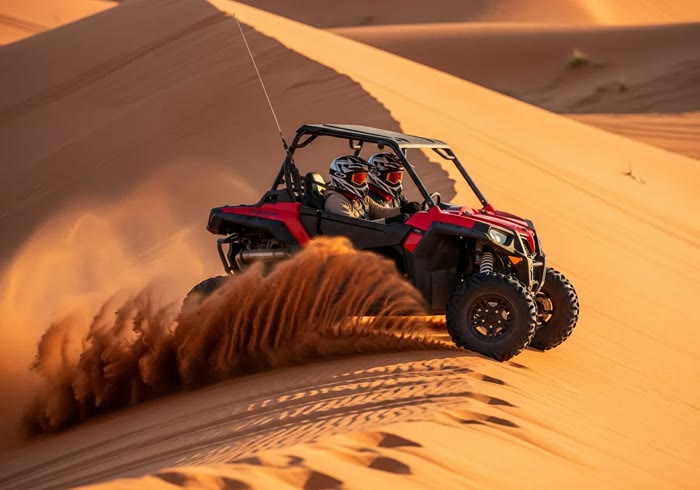
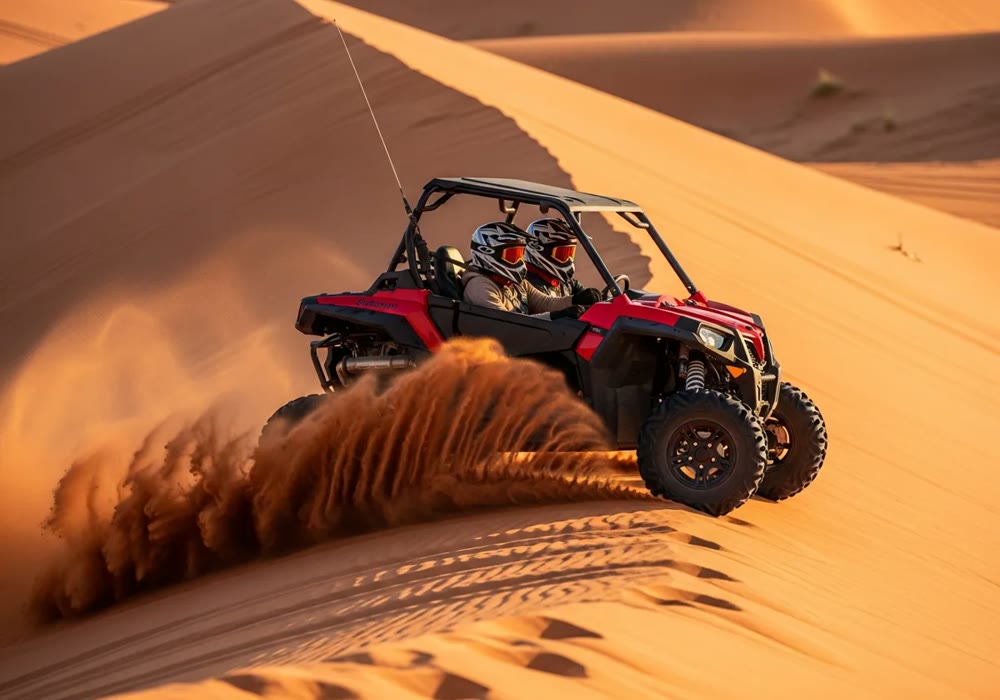
A dune buggy is not the same thing as a quad bike or a safari 4x4, even though all three run on the same stretch of red sand east of the city. A buggy is an open-frame, roll-caged off-road vehicle with side-by-side seating and a steering wheel, so it drives more like a stripped-down car than a motorbike. A quad is a solo ATV you straddle. A desert safari is a passenger ride in a 4x4 with a professional driver doing all the work. If you want your own steering wheel and your own throttle on the dunes, the buggy is the one you're looking for.
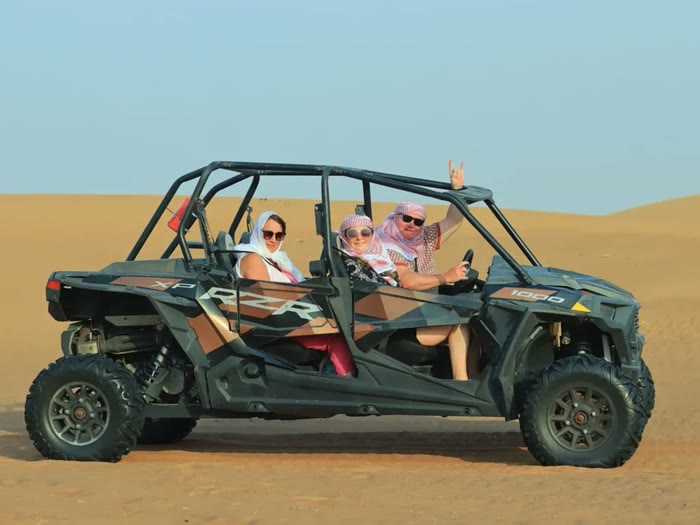
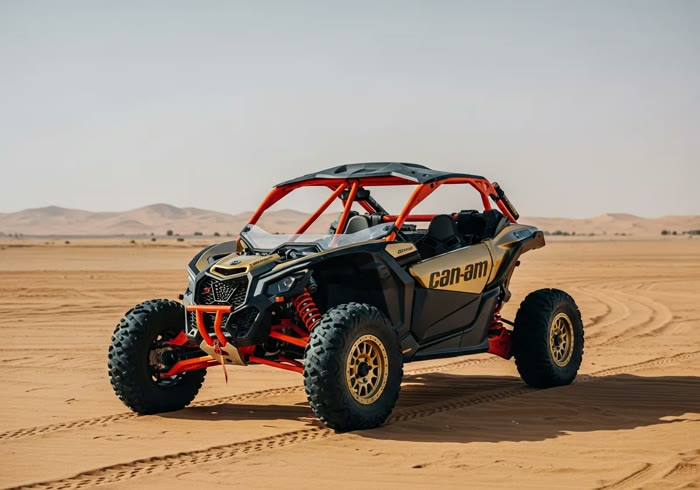
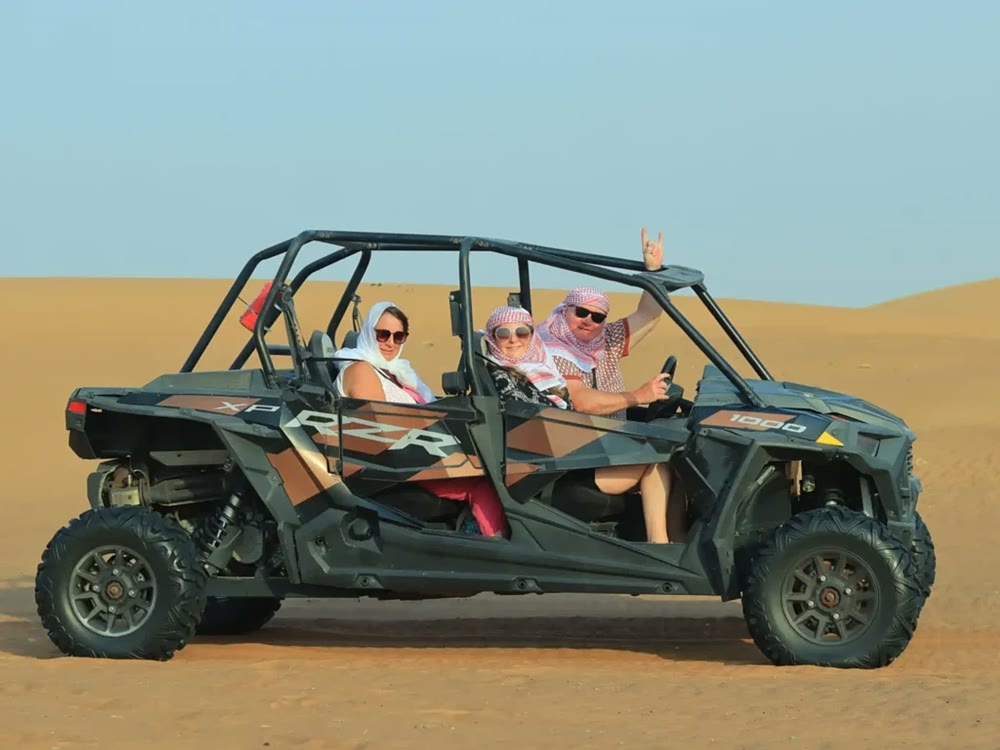
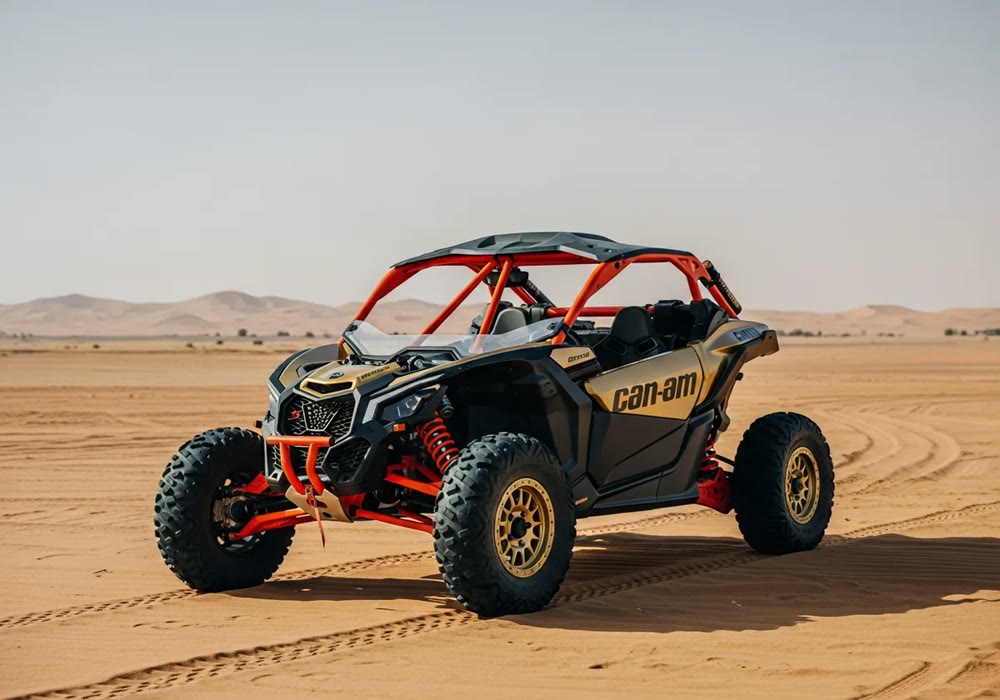
Three tiers are bookable through this page, and all three prices are confirmed, not estimates. The 2 Seater Dune Buggy 1000cc is AED 600 and is the lightest, most agile machine in the fleet — a 1000cc automatic with a roll cage and harness seatbelts built in. The 4 Seater Dune Buggy 1000cc is AED 800, same engine class, longer wheelbase, with a rear bench and a child harness option for families riding as a group of three or four. The 2 Seater Can-Am Maverick X3 is AED 999, a turbocharged sport buggy with a stiffer suspension setup and harness seats, aimed at riders who want more power under the pedal. Some fleet updates bring a Polaris RZR into the sport tier alongside the Can-Am — worth confirming current availability on WhatsApp if that's the specific model you want.
All three prices above are starting prices for the shortest slot on offer. Book a longer duration, a sunset timing, or add an outer-zone hotel pickup and the total moves up from there — there's no separate published price list beyond these three because the final number depends on what you're actually booking. Send the date, the tier and the duration on WhatsApp and you'll get the exact confirmed price back, not a rough range.
Do I need a licence to self-drive a dune buggy?
Quick answer: A licence isn't a hard requirement to book, but it can come up during the pre-ride briefing, and a guided option is always available if you'd rather not test that on the day.
Every standard booking defaults to self-drive. You sit in your own seat, hold your own wheel, and control your own throttle and brake for the full duration of the slot. A lead guide drives a separate buggy out in front and sets the line through the dunes — where to turn, where to slow down, where the soft patches are — using hand signals or a radio call depending on group size. You are not driving blind. You are following a route someone else has already read for you, but the actual driving is yours.
If you don't hold a licence, if you're new to off-road driving and not confident about it, or if you'd simply rather sit back and take in the view than focus on the wheel, a guided ride is available on the same vehicle. The guide takes the driver's seat and you ride as passenger through the same convoy, the same dunes and the same briefing. Nothing about the route or the experience changes — the only thing that changes is who's steering.
In practice, guided rides tend to suit non-drivers travelling in a family group, older parents who'd rather not handle a buggy in soft sand, or anyone who just wants both hands free for photos. On the longer 2-hour slot, some groups split the seat time — one person drives the first half, their partner takes over after a stop — and the lead guide can accommodate that if you flag it before the ride starts. Just mention it on the WhatsApp booking message so the guide knows to plan for the swap.
2-seater vs 4-seater vs Can-Am Maverick X3 — which should I book?
Quick answer: 2-seater for solo riders and couples on a budget, 4-seater for families, Can-Am X3 if you want more power under the pedal.
The 2 Seater Dune Buggy 1000cc at AED 600 is the entry point and, going by how the bookings actually come in, the one most first-timers and couples pick. It's the lightest machine in the fleet, which makes it the most agile through soft sand and the easiest to get comfortable in if this is your first time behind an off-road wheel. If you're travelling solo or as a pair and don't need the extra seats, there's no real reason to pay more.
The 4 Seater Dune Buggy 1000cc at AED 800 solves a different problem: fitting a family or a small group of up to four into one buggy instead of splitting across two 2-seaters. The rear bench comes with a child harness option, which is the detail that actually decides this booking for most families — it's the only tier in the fleet built to carry kids safely. The trade-off is size: a longer wheelbase means it's slightly less nimble on tight turns than the 2-seater, though the difference is minor at the speeds the convoy actually runs.
The 2 Seater Can-Am Maverick X3 at AED 999 is the sport pick — turbocharged engine, stiffer suspension, harness seats built for higher-speed handling. It still only seats two, so it's not a family option, and it's priced above the standard buggies because it's genuinely a different class of machine, not just a rebadge. You don't need prior buggy experience to book it — the lead guide sets the same convoy pace regardless of which vehicle you're in — but if you've driven a standard buggy before and want more feel from the machine, this is the upgrade.
Can kids ride in a dune buggy in Dubai?
Quick answer: Yes, in the 4-seater with the child harness fitted — the exact minimum age is confirmed at booking based on the child's height and how the harness fits.
Kids ride in the 4 Seater Dune Buggy 1000cc, which is the only tier built with a child harness option in the rear bench. The 2-seater and the Can-Am Maverick X3 both cap out at two total riders and aren't set up for a child seat, so if you're travelling with kids, the 4-seater is the one to book — not a lower-priced alternative you adapt on the day, and not something staff can improvise with a spare harness on-site.
There isn't a single blanket age cutoff, because the harness is fitted to the child rather than to a fixed number on a form. What actually decides whether a child can ride is height and how securely the harness sits once it's fitted at the staging area. That's why it matters to mention your child's age and approximate height on the WhatsApp booking message before you arrive — it lets the team confirm in advance rather than working it out on the spot at the dunes, which is a worse position for everyone if the answer turns out to be no.
Every buggy in the fleet, including the 4-seater, carries the same roll cage and harness seatbelts as standard safety equipment — that part isn't optional or upgraded only on request. If you're bringing a family bigger than four, the usual approach is one 4-seater plus a second buggy booked for the same time slot so the group stays together in the same convoy rather than splitting across separate rides. Group bookings that mix a 4-seater with a Can-Am or 2-seater are common for extended families who want the kids together in one vehicle while the adults split off into the faster tier.
Self-drive or guided — how does a buggy convoy actually work?
Quick answer: A lead guide drives ahead in a separate vehicle and sets the line through the dunes; your convoy follows at a set spacing.
Every ride starts at a staging area out past Al Awir, on the edge of the Lahbab red-dune belt. That's where the safety briefing happens, harnesses get fitted, and the lead guide runs through the convoy spacing rule before anyone moves. Once the convoy rolls out, the lead guide's vehicle is always at the front, reading the terrain and picking the line — where the sand firms up, where a descent is steep enough to need a slower approach, where to hold back before a blind ridge. You follow that line at the spacing set in the briefing rather than picking your own route through untested sand.
How much of the dune belt you actually see depends on the slot you book. Thirty minutes covers a single loop — enough for a strong photo set and a real feel for how the buggy handles in soft sand. One hour works through several dune ridges and is the slot most riders land on. Two hours pushes further into the terrain, with more variation in the descents and more photo stops along the way, and tends to suit riders who've booked specifically for the ride rather than squeezing it into a half-day itinerary.
Getting briefly stuck in soft sand is normal and not a big deal — it happens on most convoys at least once, and the lead guide carries a tow strap and has you moving again in a couple of minutes; the recovery routine itself is covered in the briefing so nobody's caught off guard. Larger groups run bigger convoys behind the same single lead guide, with the spacing rule scaling up rather than changing, and a rider who gets tired partway through a longer slot can flag the guide to switch into guided mode for the rest of the ride.
What's included in the price, and what might cost extra?
Quick answer: Pickup, helmet, goggles, gloves, the safety briefing, the lead guide, drinking water and a photo stop are included on every buggy booking.
The AED 600, AED 800 and AED 999 prices all cover the same baseline package, regardless of which tier you book. Hotel pickup from most Dubai zones is included, along with a helmet, goggles and gloves, a pre-ride safety briefing, the lead guide for the convoy, bottled drinking water, and a stop for photos out on the dune crest. On the vehicle side, every buggy — 2-seater, 4-seater or Can-Am X3 — comes with a roll cage and harness seatbelts as standard, not as something you pay more to add.
A few things sit outside that baseline and can add to the total. Pickup from an outer zone — the Palm Jumeirah tip, Jebel Ali, or one of the World Islands access points — usually carries a small transfer surcharge that's confirmed before you commit, not added as a surprise afterward. Booking beyond the standard slot, choosing a sunset timing, renting a GoPro for the ride, or adding a dinner combo at a partner camp all move the price above the base figure for whichever tier you've picked.
None of that gets sprung on you after the fact. The confirmed price you get back on WhatsApp already accounts for whatever combination of duration, timing and add-ons you've asked for, and standard bookings don't carry a deposit requirement — most are settled on arrival, in cash, by card, or by bank transfer, whichever is easiest on the day. Ask for the breakdown up front if you want it itemised; the team would rather explain a price than have you guessing at checkout.
How do I book, and what's the cancellation policy?
Quick answer: Message WhatsApp with your date and buggy choice; most bookings are pay-on-arrival with no deposit, and changes go through WhatsApp up to the day before.
Booking starts with a WhatsApp message to +971 52 440 9525 — send the date, which tier you want (2-seater, 4-seater or Can-Am Maverick X3), the duration, your hotel name and how many riders are coming. The team replies with the confirmed price, the pickup time window and the practical details for the day. If you'd rather talk it through than type it out, the same team takes calls on +971 50 496 8087.
Most standard bookings are pay-on-arrival — cash, card or bank transfer, no upfront deposit. Premium and combo bookings may ask for a small confirmation deposit on WhatsApp. Changes and cancellations go through WhatsApp up to the day before your ride; the exact policy depends on how last-minute the change is, so message the team directly rather than expecting one fixed refund percentage for every case.
That's a deliberate way of handling it rather than a gap in the policy. A change requested three days out and a cancellation requested the morning of the ride aren't the same situation, and a single flat percentage would either overcharge the first case or undercharge the second. Messaging the team directly means you get an answer that actually fits your timing instead of a generic number that may not reflect what's fair for a last-minute swap versus an early one.